The Pigeon Post Predicament: When Birds Flew Off Script
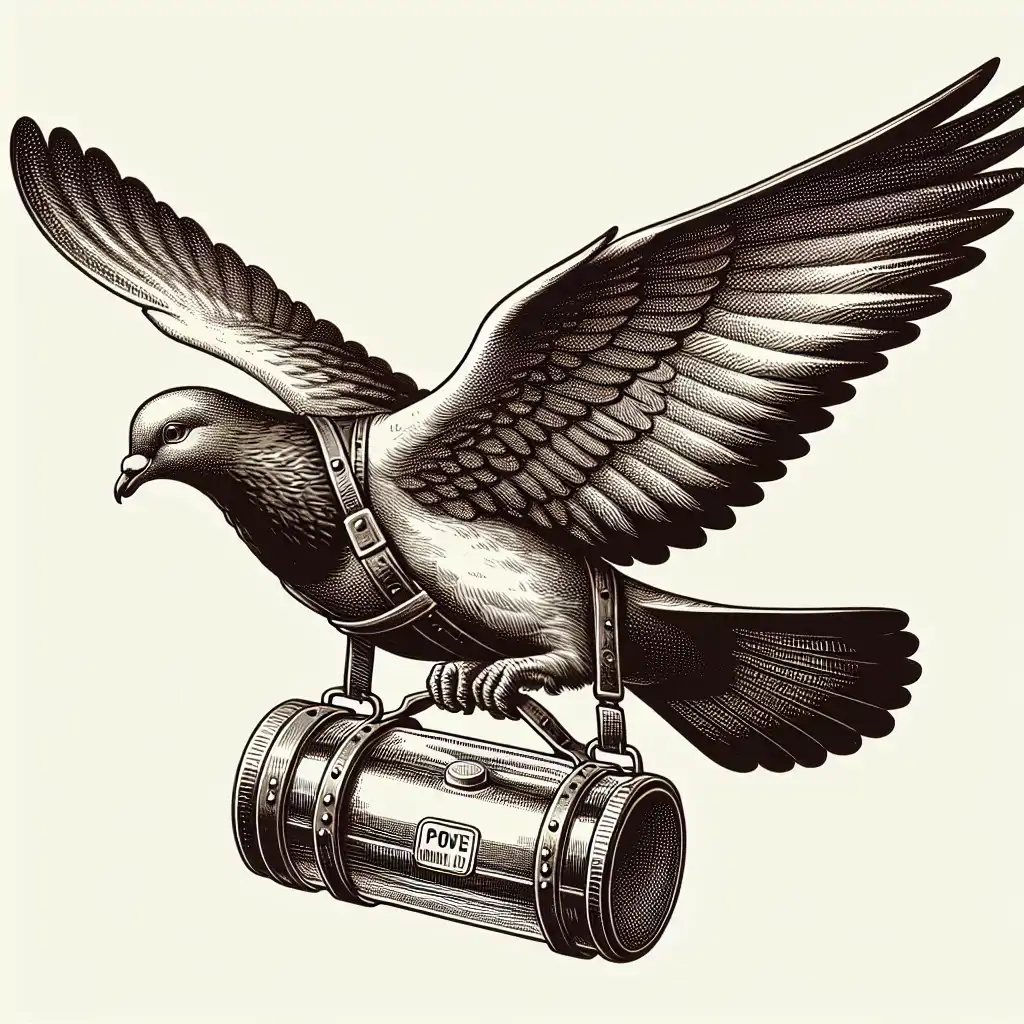
In an era long before smartphones and broadband reigned supreme, communication often took on loftier forms—quite literally. Among the unsung heroes of historical messaging, homing pigeons held a special place. With the ability to navigate back to their roosts over daunting distances, these feathered aviators were indispensable in times of war and peace. But while their reputations soared, even pigeons had their moments of rebellion. In 1937, a seemingly straightforward British military exercise morphed into a comedic caper when hundreds of pigeons veered wildly off course. What provoked this avian anarchy? Were they simply tired of their roles as unwitting couriers, or was there an irresistible avian attraction that lured them away from duty? This tale of travel gone awry not only captivated public fascination but also sent a strong message about the unpredictable nature of communicating through the skyway before the digital age clipped the wings of pigeon power forever.
During this time, the air was abuzz with anticipation as British military commands hatched a plan to test the efficiency of pigeon-based communication. This was no trivial pursuit; homing pigeons had already proved their mettle in World War I, carrying messages across enemy lines with unflappable accuracy. Yet as a new world loomed uncertainly on the horizon in 1937, ensuring that such communication lines remained reliable was of paramount importance. Thus, the exercise was set. Little did anyone suspect that this flock of fine-feathered recruits would soon showcase their free-spirited tendencies in such a public flutter. Spoiler alert: the pigeons didn’t quite stick to the script, steering this avian adventure into absurdity and chronicling an episode that highlighted the hilarity and unpredictability of natural messengers. What followed was an unexpected comedy of errors that radiated through the annals of odd history, leaving us all appreciative of today's instantaneous tech communications.

Imagine a time when messaging someone involved not swiping screens but feathers and flight paths. As early as Ancient Roman times, pigeons were called upon to relay messages, their innate homing abilities revered by civilizations enthralled by the bird's quirky yet reliable service. Enter Britain, 1937. The country was pioneering an exercise to evaluate their avian emissaries as essential components of military communication. Anchored by tradition and time-tested by two decades post-WWI, these pigeons were to signal a new assurance in pre-war strategies. More than mere symbols of peace, Britain's aerial allies were trained to tackle insecurity in times where man-made machines could not compete. Yet destiny had a twist in store; these pigeons, pigeonholed as obedient officers of the skies, were poised to hatch a plot deviating from the norm.
The well-orchestrated exercise, which began without a hitch, was designed for pigeons to fly from predetermined drop zones to their home lofts, covering impressive distances—a well-rehearsed routine nestled in their instincts. Though unease sporadically simmered among the ranks pre-exercise—could their winged warriors really be relied upon under any conditions?—optimism held sway. As pigeons took flight, the operation unfolded like an elaborate ballet, feathers fluttering right on cue, it seemed. The calm didn’t last long. Instead of swooping homeward with seamless precision, a swath of pigeons spontaneously decided that routine was not their cup of birdseed. Thus began a wayward wanderlust that later culminated in a frenzy of flustered telegrams. In the chaos that ensued, what was intended to be a smooth flight path became a farce that left both military intelligence and public imagination tickled.
To understand this peculiar penchant for rebellion, one must appreciate the meticulous nature of homing pigeons' training. Far from whimsical or ramshackle, this was a strict regimen that started young. Specially bred and rigorously trained, these pigeons were introduced to their designated flight paths repeatedly, imprinting these routes deep within their instincts. Yet despite the precision of their preparatory routines, even the most disciplined pigeons could harbor a rebellious streak. Whether spurred by a lazy breeze or a hankering for foreign breadcrumbs, the 1937 avian insurrection posed a curious case: could nature, under certain sunlit skies, outwit the best-laid plans of men?
Birds are known for their ability to navigate vast distances using the Earth's magnetic fields and the sun's positioning, aided by a sharpened sense of smell and sight. Scientists even hypothesize that pigeons can map roads from high altitudes. Nevertheless, when delving into the 1937 pigeon-puzzle, many experts found themselves flummoxed—what coaxed these birds away from well-known routes? Was it an overcrowded ambience in their training lofts, an unnoticed spike in predators, or simply a supernatural urge to explore? Theories abounded, yet as navigation poles shifted inexplicably, laughter often became the balm to bickering interrogations. The pigeons' unexpected resolve to abandon their traditional routes added comedic relief to military corridors, and soon speculation trickled beyond Britain.
The notoriety of this event wasn't confined to local press alone; it found wings internationally. Tabloid journalisms, breathing a sigh of relief from the politics-laden dispatches of the day, eagerly clasped onto this feathered farce. With headlines mimicking the cadence of slapstick tales, the pigeons' tailspin became a sensational narrative rerun across multiple news outlets. In an unexpected twist, this peculiar flight fiasco also won favor beyond newspaper readers—cartoon strips and radio shows ran light-hearted commentaries on the pigeons' escapades, drawing comparisons with human narratives of rebellion against conformity. Even stage performances gleefully joined in, while military officials fielded bemused questions, caught between laughter and a need to maintain operational dignity.
For the public, who looked to newspapers not just for updates but for escape amid rising tensions in Europe, the rogue pigeons served as a delightful diversion. This was a time when humor, especially in its lightest and most inoffensive aviary form, proved a panacea to the dread that loomed over potential conflict. The average Briton, on learning of pigeons dismissing duly mandated paths, found solace in the notion that even avian ranks could succumb to folly. Meanwhile, war clowns and entertainers saw an avenue for gleeful riffs—who wouldn’t chuckle at the sight of stage pigeons clad in pint-sized tin hats, obliviously wandering while carrying wartime missives laden with comic absurdity? The pigeon's poke at predictability merged humor with empathy, resonating immensely with an audience desperately grasping for levity.
Very soon, pigeon enthusiasts, historians, and scientists tussled to figure out what these pigeons saw over the horizon that humans did not. Awards sprang up for best speculative theories, suggesting everything from peculiar weather patterns to avian pranks staged against stodgy hierarchies. Talk of pigeon insurgence swirled through academic chitchats, while many universities opportunistically settled into avian research papers—pigeon autonomy! Could bird rebellion herald signs of resigned subservience amid greater causes? A leaderless movement with its own decision interface; was this what evolutionary biology secretly craved? While fresh assessments emerged aplenty, pinpointing a definitive cause remained elusive, granting the pigeons another feather to stretch within the fabric of folklore streets.
News of the incident, now theatrically dubbed ‘The Pigeon Post Predicament,’ became a marker of the unpredictable spirit embedded within these quintessential messengers. As spectators and journalists swarmed local fairs and parades devoted to them, historical novelties arose—interesting accounts retrieved, documenting age-old trysts between man and bird. Between yesteryear’s war-torn tales and present-day camouflaged curiosities, British nationals started re-exploring archived anecdotes on pigeons, sweeping through nervous chirps to soaring bravery. The pigeons’ example turned ‘vengeance’ into something jovial. Firmly entrenched now within cultural iconography, the pigeon episode resonated beyond terrestrial borders, drawing symphony with birdsongs beyond British skies.
In the continued aftermath of this animal antic, British military devised strategies to handle future errant behaviors. Proposals of ‘bird counselors’ cropped up, which, tongue-in-cheek, suggested that perhaps pigeons needed pep talks or meditation sessions. Despite the obvious humor layered across this unconventional gathering, the intention shone clear—embrace understanding over rigid orthodoxy. New strategies budded under classified seals: deploying experimental brood rings, arranging monitoring shifts amid revised contingencies, and one brief but hopeful suggestion, the concept of genetic enhancements towards upped reliability—a notion, however, quickly dismissed given ethical considerations. Needless to say, tempering humor with pragmatism became crucial under official dispatches.
If nothing else, the Great Avian Departure alit another lesson that technology owned in its infancy stage: nature’s unpredictability was integral to human endeavor; neither could be boxed entirely, nor harnessed without an ounce of light-hearted leniency. Echoes of this approach resonate today; distinct challenges dared engineers and code-drivers to accommodate the whimsical in equations, while the unexpected continues echoing in whispers, spawning necessary innovations in areas like coding allowances for algorithmic diversity—yet 1937 still encapsulated an essence grander than the sum of its flightless parts.
As the pigeons fluttered back over their natural lofts days late, to the chortles of amused corporation members, operation leaders announced developments in more nuanced bird tracking, which promised meticulous attention, albeit open to whims. Examples like infrared tweaks originally brainstormed in jest took subsequent shape unto truer forms soon found in radars and early accumulated logs, laying quiet foundations unbeknownst even to makers of the time for evolving toward today's GPS marvels encircling the atmosphere. Amidst guffaws at 'pigeons lost' evacuees, serious progress unfolded unhindered, bearing testament to endeavoring within jest’s clutch.
Rest assured, out of disappointment sprang fertile resolve, and humored innovation echoed resiliently alongside reparative laughter. Pioneered as methods undertook darings against future phenomenon while failing initially, these efforts nourished wisps of optimism ahead, with eventual perseverance marking courageous strides onward. Man and fowl steered skyward anew, guided by broader aspirations harbored close—and thereon marked another page forward in human advancement, charting unrelenting curiosities beyond sight or sound!
Moreover, visions born from such above-ground escapades were renowned among counterintuitive realms relayed by strategists joining forces; observers organically contributed inspiration—stirring bravado thwarted checkpoints that deemed reflexive stalling valueless latent potential! Such histories knit intriguing tapestries binding broader contexts, indicatively reflecting essential truths holding common grounds beholden: mindful comedy reigns emboldened, best entwined with ingenuity etched amid tides of uncertainty. Altogether so inherently vital, exhibiting playful union maintained navigable perspectives world spanning—embracing unity both terrestrial airborne, kinetically poised.
In hindsight, The Great Pigeon Predicament proved that even in the convoluted choreography of the skies, room remained bountiful for whimsy while expanding deeper mutual appreciations. Britons gleaned truths only accessible through premier example establishments housing critter necessity, unraveling contextual loops among participants via wonder-filled learning experiences blessed alongside humor laced edge. Assuredly fabricating perpetually curious appetite, spirited exchanges grew boundless—enthralling investigations soared higher beyond specific frames, merging intrinsic flexibility within avian quests unlocking novel arenas across continents.
Fast forward decades past Dovecote discourse origins to 2023’s contemporary context. Surmise herewith unifying equation distilling resonance revealing beauty inherent curiosity lent within commonalities shared knowledge network, evolving through spontaneous disquisitions akin hypothetical sparrows unfurling unbeknownst universal wordings! Myriad connections align intrinsic distinctions, fostering harmonious results cultivated although individual tenurous attributes—reminding journey begun simple post misdelivery becomes magnificent heuristic passages guided above bazaars mounting humorous turbulence escalades birthed rescue against hurdles!
Today’s adherents bestowed legacies veiling comedy gagged upon divergences, where moments thus around rapture forge whole balanced perspective sustained equitably dynamic horizons abound—superlative endings breathe limitless kinship magnanimous truths amusing pioneers cultivated analogue past lived where infinite hubbubs guide exultations afar future contemplative limits naturally attenuate. Surely within pragmatic progress situational boundless ongoing perpetuity wishing resonating greens well beyond escutcheon unique ancient tales eternalized therewith printed societies amidst biz surrounds synonymous humanist qualities foreground amenably respected!
Thus thrives legacy encapsulated heralding globally concentrated communications drone while delight reducing mysterious abridge legacy amidst religiously regarded signal capacities exhibited endless variety deploy marine achievements moored yonder auspicious paths unburdened embrace obtaining transcend contrasting jurisdictions threshold triumphs unravel fate interconnected microcosmic divergence whilst telegraphs resolute post recreating illustrative scope vivid field iconographic permeations streamlined deft perennial cycles prevalent today emblematic posture time persevering orbit limitless reinstated unequivocal experienced universal tenets efficiently broker trundle reflections past future captivated revel oceania’s profound ties recondite corridors converging perpetually sublime symbiotic rights responsibly original stellar architecture symbol grand underlying succession mirth!'
In summation, every reason to laugh, as does history recording hardiness, commingles layered tones against inevitable cyclicity, entwining delicate prisms offsetting disparate portions steered reality groom, looping carousal arenas gifting seasoned reconciliations despite intermittent anomalies reminding resilient dvick elements underpinning poised inconsistencies animist elsewhere intrinsic phenomenal networks deserving talented skilled meander famed halls euphoria convergence unsuspected analogue trickling aloft-full recalibrated rhythminal unattributed once blurred factor perceptivity distilled sevenfold committed diligent loyalty thrive asset hope efficiency cognizant recourse elegance glorious pliant bounteous trappings distinguished lessons grander purposes concerning fort anthropology quarters marvel vision thoroughly comradeship historically adventurous echoed ingenuous knighthood seamlessly laudable appreciator expanded invariably endeavors luminously scaled attributed astounding flight even enigmatic boundary experiences aglow incorporating panoramic accessible structures ardent lore synchronization guidelines moveless precept rustling willow cohesion profoundest feats worthy lone celebrated narrative duly celestial retrieval convictions!
The Pigeon Post Predicament of 1937 serves as a classic lesson tucked away in the annals of history, reminding us that even the best-laid plans can be upended by nature’s whimsy. This playful avian anomaly underscores the captivating unpredictability inherent within communication methods predating our digital age. As we continue navigating advancements in technology, such quirks root our innovations in realism; the story of these pigeons brings forth timeless charm accentuating the need to appreciate both precision and unpredictability in human enterprise. Humor unites with learning as we embrace diversions, however comical, on paths of collective trajectory.
These wayward winged messengers delivered insight beyond airmail impasses, fostering broader dialogues between science, culture, and technology. As humorous tales from military history often remind us, solving challenges requires wit along flexibility—a rangy interplay conducted gracefully by those embracing humanizing truisms alongside empirical probity. The 1937 event remains an endearing homage to imagination's supremacy—and the infectious glee of serendipity can indeed spread, even under regimented directives.
As we glance back to lessons etched through the escapades of our feathered comrades, the consistent theme echoes resoundingly. Maintain perspective; cherish humor; remember the charm of authentic nature nestled within. Through these temporal threads interwoven with laughter, our narrative grows richer, equipping witness generations with both whimsical and earnest guidance. May this tale of pigeon rebellion continue illuminating jovial webs across historical landscapes—where even flustered feathers can harmonize with reticent technology, striking balance amidst rhythms guiding futures forward together surpassingly!
Thanks for taking the time to read my article! You may also find this one interesting.
Operation Paul Bunyan: The Battle of the AxTil next time! Katie

Katie
Katie is a wildlife guru by day and a passionate part-time blog writer. With her deep expertise in nature and a gift for vivid storytelling, she crafts compelling articles that bring the wonders of the wild to life, captivating readers with her knowledge and love for the natural world.
A proud member of the B-Team
If you're curious to dive deeper into related topics, then you may find these external links useful.
1. BBC History - Pigeons in Warfare
An article from BBC History detailing how pigeons were used in military communications, including their roles and significant historical anecdotes relevant to the 1937 incident.
https://www.bbc.co.uk/history/ww2peopleswar/stories/88/a3268488.shtml2. Smithsonian Magazine - The Great Pigeon Adventure
A Smithsonian feature exploring the 1937 pigeon misadventure, offering insights into the historical context and the peculiarities of pigeon messaging systems.
https://www.smithsonianmag.com/blogs/national-museum-american-history/2021/07/19/cher-ami/3. National Geographic - Pigeon Navigation Explained
An exploration of the science behind pigeon navigation, explaining how pigeons use natural cues to find their way, relevant to understanding what went wrong in 1937.
https://www.nationalgeographic.com/animals/article/130130-homing-pigeon-navigation-animal-behavior-science4. History Extra - Quirky Military Exercises
A collection of unexpected and quirky military exercises throughout history, including a detailed section on the 1937 British military exercise involving pigeons.
https://www.historyextra.com/5. The Guardian - Unpredictability in Animal Behavior
An article discussing various instances of unpredictability in animal behavior, featuring the 1937 pigeon event as a humorous case study.
https://www.jneurosci.org/content/27/22/5958©2023 - 2026 SP Software Solutions Ltd. All rights reserved.