Operation Paul Bunyan: The Battle of the Ax

In the wild theater of weird history, nestled amid tales of odd wars and peculiar battles, lies the truly bizarre story of Operation Paul Bunyan. This surreal event transpired in the tense period following the Korean War, a time when even the most trivial of incidents had the potential to escalate into a full-blown crisis. The world was no stranger to odd reasons for conflicts, but the spark that led to this operation was, quite literally, rooted in nature — a tree, to be precise. This poplar tree was no ordinary matter though; its existence became the unlikely epicenter of international tension, highlighting how the fragile peace between North Korea and the rest of the world was constantly hanging by a thread.
The chain of events that spiraled into Operation Paul Bunyan began on a seemingly innocuous stage at the Korean Demilitarized Zone (DMZ). This buffer zone, designed to prevent direct military engagements, instead became the site of a gruesome altercation. On August 18, 1976, two United States Army officers were brutally killed by North Korean soldiers. Their crime? Attempting to trim a poplar tree that obstructed the view between two guard posts. In any ordinary circumstance, this might have warranted a stern talking-to by the local gardening committee, but in this precarious environment, it led to brutal violence and a broader conflict.
The incident, which could have been a minor diplomatic skirmish, rapidly escalated. This peculiar tale encapsulates the often absurd nature of diplomatic relations and military protocols. What followed was Operation Paul Bunyan—an indelible mark on history when an arsenal of military might, down to ceremonial ax-wielding soldiers, was mobilized for the grand act of toppling one unassuming tree. Dive into this surreal, saber-rattling tale, where trimming foliage flirted with igniting another war, illustrating the capriciousness of peace and the enormous consequences small actions can wield in global affairs.
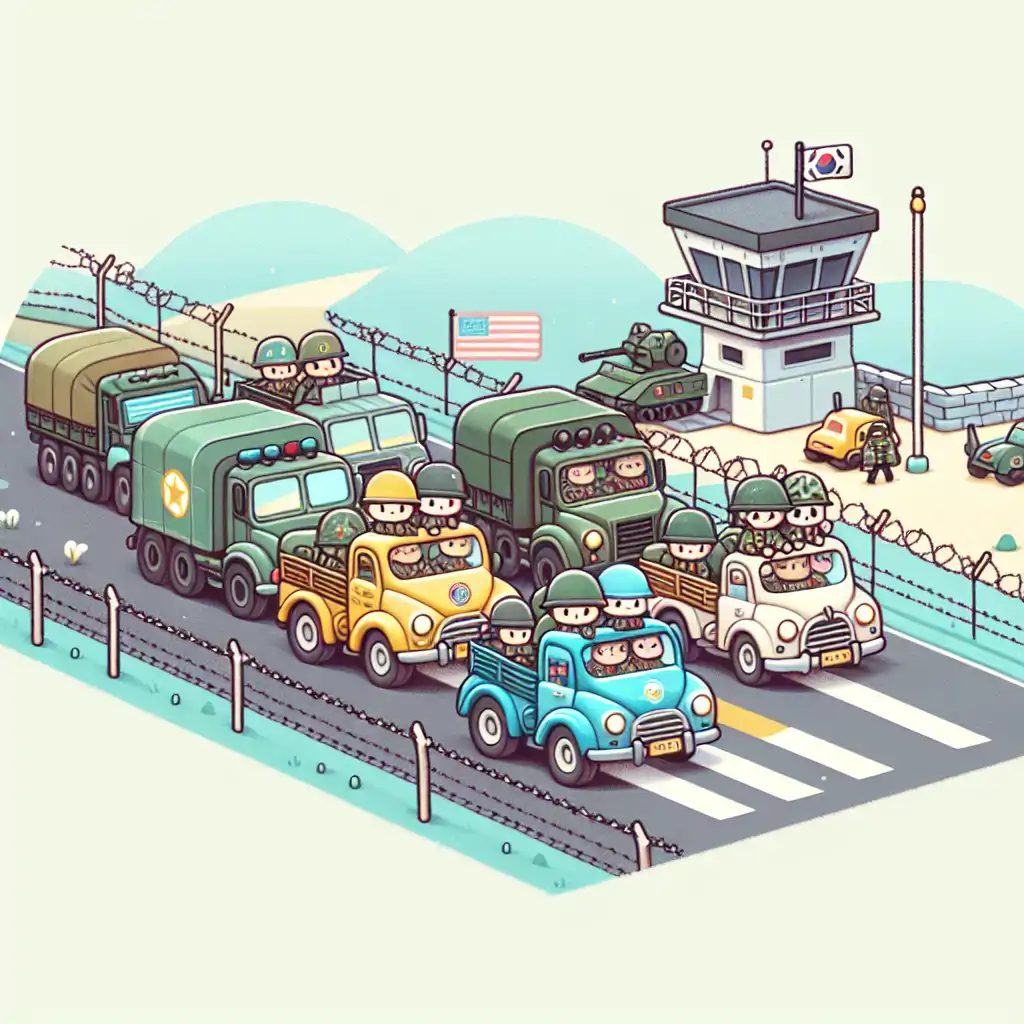
On that fateful August day, the air was heavy with much more than just humidity. The U.S. officers, Captain Arthur Bonifas and First Lieutenant Mark Barrett, ventured to the DMZ to carry out what was, on paper, a routine mission — prune a tree. However, little did they anticipate that this act would cost them their lives. Surrounded by heavily armed North Korean soldiers, the mission turned catastrophic when it became apparent that the tree marked more than just an obstruction; it symbolized authority and the thin line of resilience. In a sudden frenzy, the North Korean soldiers attacked the team with axes. Captain Bonifas and Lieutenant Barrett were brutally murdered amid the chaos.
This violent episode, now known as the ‘Korean axe murder incident,’ brought the world to attention. The response by the United Nations Command and the United States was simmering with outrage. The backdrop of the Cold War rendered the incident more than just a local altercation. The need to survey who could ‘trim’ or ‘control’ a tree masked questions about greater control and influence in the region. Secretive negotiations and quintessential political wrangling flared behind closed doors, reminiscent of a theatrical drama but with very real stakes.
In response, the United States launched Operation Paul Bunyan—an operation named after the mythical giant lumberjack. Planned meticulously to be a display of overwhelming force to deter further aggression, preparations were reminiscent of gearing up for an epic battle rather than a horticultural task. The metaphoric sledgehammer approach sought to send an unambiguous message across the DMZ—a message not to be trifled with. In its execution, Operation Paul Bunyan was a curious blend of humor, surrealism, and sheer military might displayed against a botanical adversary.
When Operation Paul Bunyan unfolded on August 21, 1976, the scene at the DMZ more closely resembled a military parade than a gardening exercise. Rank upon rank of soldiers, numbering 813 in total, assembled at the DMZ, accompanied by tanks, attack helicopters, and B-52 Stratofortresses that flew overhead in a visible display of power. Not content with merely outgunning their adversary, the operation full of symbolism involved engineers equipped with chainsaws protected by an infantry company armed to the teeth. Among them was a symbolic contingent of ax-wielding soldiers—a nod to both the task at hand and a reminder of the brutal axe assault which necessitated this response.
Yet this extravagant display was not without its risks. With the world watching over them, there was apprehension about how North Korea might interpret or respond to such a large-scale mobilization. In a precarious moment of what could best be described as high-stakes gardening, the balance between bravado and unforeseen repercussions was indeed a nervy tightrope. Diplomacy hung in a delicate equilibrium, where one false move could unfold into another conflict, forcing strategists and military leaders to tread carefully as warriors themselves plied axes to wood.
While the operation lasted a mere 42 minutes, the intensity during those moments was palpable. Soldiers, in precise synchronization, moved to sever the offending tree with chainsaws, while the airborne threat of North Korean retaliation loomed ever-present. Every second ticked under the scrutiny of higher command, international media, and the North Korean forces, each awaiting what the outcome might mean for their future. The magnitude of risk was stark—the smallest miscalculation could snowball into an uncontainable blaze of conflict.
However, in what could be considered both a relief and a minor miracle, the conclusion of Operation Paul Bunyan was smooth and dare one say, anticlimactic. North Korean forces, who had taken positions on their side of the DMZ and appeared ready, watched but did not engage, perhaps stunned or simply strategically withdrawn. They observed as the poplar tree, symbolizing both a sentinel and a provocateur, was ceremonially felled. With its collapse, risk dissolved and tensions began to deflate.
One might wonder why such an intensively choreographed display was necessary over something as trivial as a tree. Yet, in retrospect, Operation Paul Bunyan reflected an era where symbols—no matter how minute or odd—held immense political weight. It was less about the tree per se and more about the imperatives of strength, control, and deterrence in a world tense with nuclear prospects and espionage. The operation proved a testament to the curious interplay between nature’s simplicity and human complexity.
Moreover, the event echoed the larger-than-life legends of its namesake, the mythical Paul Bunyan. The hypnotic scale of the operation and its ‘absurdity with a purpose’ justified its whimsical name. In folklore as in reality, Paul Bunyan was known for his mighty size and strength, rendering massive boasts into achievable feats. Hence, Operation Paul Bunyan wasn’t just boundary testing but symbolically represented dominance over circumstance, claiming a 'can do' spirit over challenges, no matter how bizarre.
Despite the successful execution of the operation, the anecdote didn't end there. Predictably, the incident garnered international attention sparking a whirlwind of diplomatic communications and a not-so-invisible campaign of jostling amidst the giants on the political chessboard. The operation was both an acknowledgment of catastrophic potential and a crisis averted. It was recorded in history not only for what it was—a tree removal—but for the greater dialogue it nurtured about peace and power.
As surreal as elements of both the incident and operation were, it presented what many considered a quintessential Cold War choreography—an exercise of posturing that in many ways avoided bloodshed. It was a synchronized dance of might and negotiation, all played under a veneer of tension, theatrics, and miscalculated despair. Incident and response, tree and axe, were magnifications of the ongoing global disparities; peace hangs by threads, sometimes leafy ones, and rests forgotten, more oft than not, near unperturbed roots.
North Korea's reaction following the operation was as peculiar as the event itself. In a move that cemented the surreal aura surrounding the affair, North Korea's then-leader Kim Il-sung conveyed through intermediaries a regretful communiqué expressing sorrow over the killings—although stopping short of an official apology. This peculiar diplomatic shuffle was a nod, perhaps, to the effectiveness of the display, with limitations on backing down, yet a subtle note wishing to avoid further escalation.
Further underlining the unusual atmosphere surrounding Operation Paul Bunyan, it gave rise to a rather eclectic legacy. The operation itself became a curious footnote studied for geopolitical strategy and showed how a whimsical conflict over vegetation highlighted seamless teamwork under sheer pressure. At the human level, the operation exemplified how themes of courage, justice, and absurdity interweave within the stories human history stitches together.
Operation Paul Bunyan was recognized as a landmark event in the chronicles of military history but also stood apart as a representation of how human nature struggles to reconcile power and peace, grit and diplomacy. The tale paints a vivid picture—oddly poignant in its mix of somber tragedy undercut by an almost comedic orchestration. A subtle reminder that serious matters sometimes emerge within surroundings that are literally and metaphorically green—and that modest beginnings can bear the heftiest implications.
At the heart of any decision related to an incident, however, are the ordinary men and women deployed there who carry both the weight of expectation and the burden of unforeseen consequences. Their expressions, actions, steely nerves, and perhaps even humor define not only the mission but echo across time, resonating in the way communities, nations, and individuals reflect upon historic anomalies. In the tireless heat of August 1976, these distinctions were etched into the record, depicted not only in headlines but the annals of a fascinating global past.
While Operation Paul Bunyan achieved its goals and restored a degree of stability along the volatile border, it also served as a case study for future interactions within the peninsula and beyond. Dialogues and tactics influenced by historical peculiarities provided fodder for lessons in restraint and resolution via strategic deterrents. It showcased the possible outcomes when curiosity-defying standoffs are met with innovative yet cautious resolves—illustrating not only what humankind is capable of achieving but also cautions as to its perilous vulnerabilities.
Ultimately, in a world where decision-making often treads razor-thin lines of danger, Operation Paul Bunyan stands testimony to planning, precision, and ridiculously bold strategies that can avert imminent disaster. While it can be analyzed and criticized, the hope diffused through its theatrical execution reflects aspiration for peace beneath apparent disarray. It brings to bear how great power relations can sometimes revolve around the quirkiest pivots—such as a green leafy provocateur that was once a tree at Panmunjom.
The incident, while seemingly amusing in essence, undoubtedly involved devastating loss and intrepid fear, bravely overcome without rushing headlong into turmoil. This facetual interesting dance amid historical quirks is ultimately what makes the richness of oddities not only meaningful but essential in painting the broader human narrative. It forms within the most mildly outlandish scripts, visions of hope and resolution shaping tomorrow. For many, understanding, remembering, laughing, and sometimes cringing over such histories, encapsulates the infinite variance of our shared world.
The memory of Operation Paul Bunyan subtly resonates over landscapes both military and ecological. It remains a metaphorical tale that transcends its immediate context, challenging myths surrounding strength, influence, and the significance attached to symbols, no matter how petite or grand. Beneath its memorable veneer lies an understanding uniquely human—that no matter how grim or outrageous conflicts may seem, there is always room for mitigation where cleverness is matched with wisdom.
As we reflect on this history, the lessons learned reach beyond mere military strategy. They approach broader cultural understandings as well—seeking balance and stalwart diplomacy that leverages wit, hydration of the human spirit amid tension and tribulation, and seeding awareness where might alone cannot hold sway. Amidst the echoes of what could have been a tumultuous tree removal, we recover, rejuvenate, and relearn. From past eccentricities, such as Operation Paul Bunyan, emerges growth not unlike a story—a trunk rising from historical woods.
In the broader ambit of analysis, the operation raised awareness about ecological interactions, perhaps inadvertently reminding us how these go hand in hand with our socio-political engagements. The denouement was a unique blurring of fantasy and reality, where legends like Paul Bunyan met the world in unexpected ways. It reminds us of the necessity to respect, negotiate, and maintain a harmonious relationship not only with one another but also the natural world that we call our own.
The significance entwined amidst the foliage-clad diplomacy of Operation Paul Bunyan illustrates history's uncloaked struggles wherein stories echo themes that endure. From an observer's gallery of universal history, it encapsulates a fascinating facet of standing firm amidst errant storms, whimsical trees, dual-natured overtures, and resilient outcomes. It bridges eras, tying knots of understanding and insight every time history’s tapestry flutters with artistic oddities from past chapters.
In its entirety, Operation Paul Bunyan shapes portentous discussions around strategic contemplation, historical narrative, and folklore-fashioned context all sewn into realms of soldier's courage and peaceful resolve. America’s great luminaries, from fictional titans like Paul to decision-driven leaders, become larger-than-life actors on world stages—portraying diplomacy wildly and responsibly—even with plant-based interludes that punch historical pantheons. Yet, therein lies affirmation; within odd concertos, emerge marvels of human endeavor.
In conclusion, Operation Paul Bunyan served not only as a historic page-turner but also a vivid showcase of how fortitude and strategy meet unexpected forests head-on. The tale reverberates through arcs of time, offering insights into the idiosyncratic, funny, tragic, and ultimately profound experiences crafted upon humanity’s throat-annoying script. It carves into memory an adventure where the ordinary tree stood its ground against forces beyond, echoing befuddling consequence and unveiling an enigmatic series.
This curious chapter of weird history stands as an artifact. It looks back, teaching, tickling, reminiscing upon the humor and heartbreak that lines its extraordinary narrative. We revisit Operation Paul Bunyan with infectious intrigue, lest we forget—the simplest roots may worm great ground. Even nature’s whim within conflictous days, mighty tales, extraordinary names, and their inevitable mastery over moments may bring not only trees but mankind into oblivious embrace.
Operation Paul Bunyan inevitably bridged wilderness, war, and sentient existence into one. It carves into history with distinction—a blending of archival humor to herald-final peace-building. Let us hope that within capitalized legacies, unresolved narratives may mature around beneficial foliage forging merriment in maintaining 'absurdity with purpose.' This enduring anecdote vividly highlights, albeit sincerely, seeing wit conduct humanity wherever it may deem fit—in capturing gallant tales today and forever.

Operation Paul Bunyan stands etched within peculiar history's metaphorical wood, bringing a tale of reckoning where swords, or in this case, axes, remained sheathed amidst non-traditional arenas. It offered a glimpse into how military enormity, creative orchestration, and minimally triggering circumstances can nurture diplomacy rather than devastation. Such episodes, strange, gripping, and thoroughly extraordinary, are quintessential to acknowledge as portals into both our character and evolution as societies poised under potential conflict.
As we close the chapter on this unique episode, it remains essential that history, with its colorful oddities, is remembered for the multifaceted layers that define humanity. The audacious tale of a simple poplar tree and its consequential toppling forever accentuates how even humblest actions may bear vast significance within global consciousness. For beneath the laughter and incredulity lies truth—the smallest sparks flicker through time's canvas, illuminating understanding above and beyond.
Thus, Operation Paul Bunyan, in its unyielding timbered might, restrains as an enduring reminder of determined force, humor, tragic casualties, and indomitable resolve. Through its spirited adventure, truth casts shadows of insight and empathy, amplifying human narrative amid surreal stages played out beyond leafy landscapes. From seedlings of strife, blossom every tree of embrace—cultivating wisdom, humor, and shared stories growing together amidst the world's expansive forest tapestry.
Thanks for taking the time to read my article! You may also find this one interesting.
The Great Stink: London's Smelly SolutionTil next time! Prijanka

Prijanka
Prijanka is a wellness coach and inspired blog writer. Drawing from her expertise in holistic health and her talent for motivating others, she writes insightful articles that empower readers to live healthier, more balanced lives, blending practical advice with a genuine passion for well-being.
A proud member of the B-Team
If you're curious to dive deeper into related topics, then you may find these external links useful.
1. Wikipedia - Korean Axe Murder Incident
Detailed article about the Korean axe murder incident of 1976, which led to Operation Paul Bunyan.
https://en.wikipedia.org/wiki/Korean_axe_murder_incident2. History Channel - Operation Paul Bunyan
A historical overview of Operation Paul Bunyan, including its planning and execution in the context of Cold War tensions.
https://todayinhistory.blog/2017/08/19/august-19-1976-operation-paul-bunyan/3. Military History - Operation Paul Bunyan
In-depth analysis of the military strategy and geopolitical implications surrounding Operation Paul Bunyan.
https://medium.com/@leneveah143/operation-paul-bunyan-the-us-militarys-showdown-over-a-tree-ef079d5ae9164. BBC - Korea's DMZ History
An exploration of the Korean Demilitarized Zone's history and key incidents, including the axe murder incident.
https://www.bbc.com/news/av/world-asia-685493595. The Atlantic - Absurd Military Operations
A feature on bizarre military operations in history, highlighting the absurdity of Operation Paul Bunyan.
https://www.theatlantic.com/international/archive/2018/06/axe-murder-north-korea-1976/562028/©2023 - 2026 SP Software Solutions Ltd. All rights reserved.