The Great Molasses Flood: Boston's Sweet Disaster of 1919
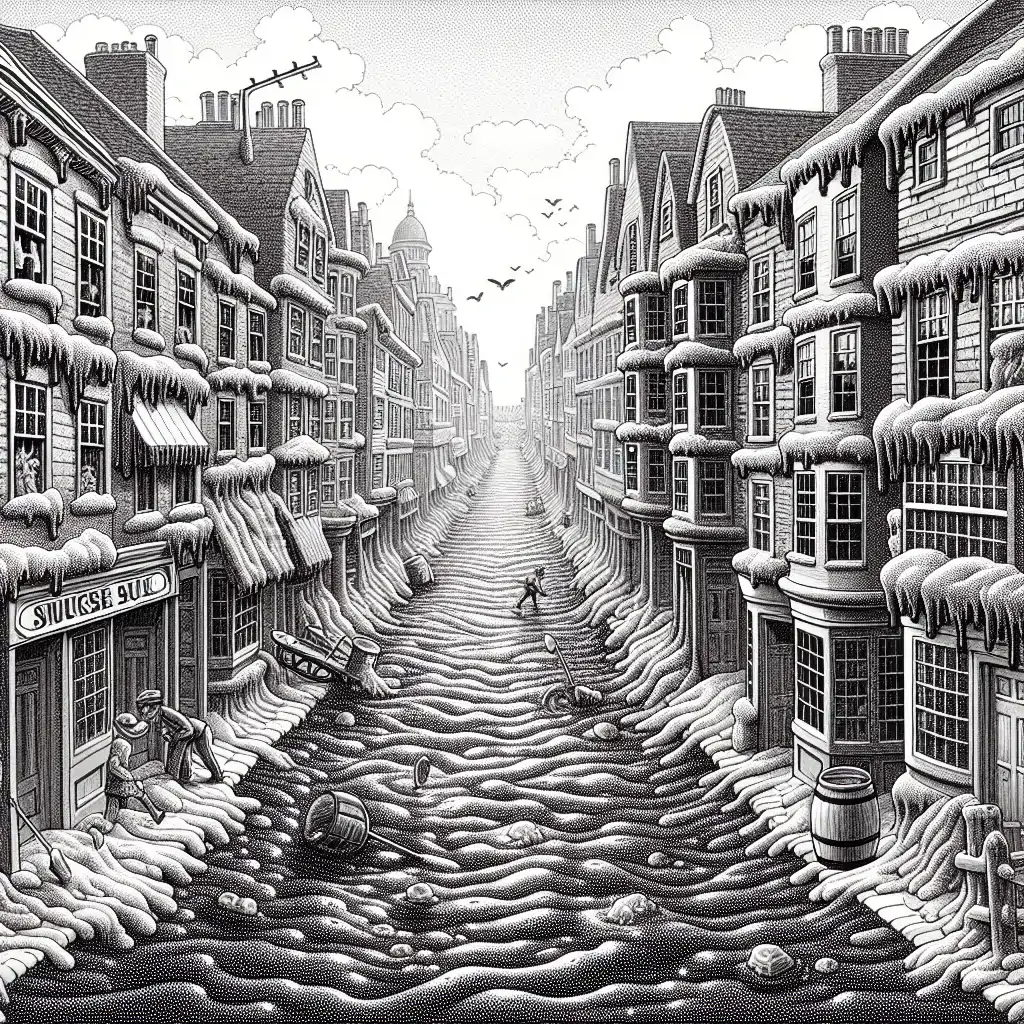
Boston, a city often synonymous with American history, found itself entangled in an unexpectedly surreal disaster one fateful winter day in 1919. Imagine walking through the bustling streets, the usual sounds of urban life filling the air, when suddenly, a deluge of molasses sweeps everything and everyone in its path. On January 15, 1919, Boston's North End became the unlikely stage for this sticky spectacle when a massive molasses storage tank succumbed to catastrophic failure. The tank unleashed a 2.3-million-gallon torrent of molasses, creating a peculiar wave that surged through the streets at an astonishing 35 mph, leaving chaos in its viscous wake. The Great Molasses Flood may sound like a Roald Dahl story, but it was a tragic reality, resulting in the deaths of 21 unfortunate souls and injuring 150 more. Far from being a comedic episode, this event wove a sobering tapestry of human struggle and showcased glaring oversights in engineering and regulation that characterized a bygone era.
The story of the Great Molasses Flood is one that begs to be told. It is a tale filled with drama, tragedy, and quirky historical insights. Behind the bizarre imagery of molasses cascading through the streets lies a cautionary tale of cutting corners in an industrial landscape driven by profit over safety. As we peel back the layers of this sweet disaster, we uncover a world of greed, neglect, and eventually, reform. What led to this unusual incident? Who were the people caught in the muck of syrupy catastrophe? And how did this singular event reshape safety protocols and regulations within the United States? This blog delves into these questions and more, offering you a glimpse into one of the most bizarre chapters of American history—so grab a spoon, or perhaps a mop, as we explore Boston's sticky past.

The Great Molasses Flood traces its roots back to the Purity Distilling Company, a subsidiary of United States Industrial Alcohol (USIA). In the early 20th century, molasses was a valuable commodity, serving as the primary ingredient in the production of industrial alcohol used for munitions manufacture during World War I. As demand soared, Purity Distilling built a colossal storage tank along the railroad tracks in Boston's North End to hold the molasses brought in by ships from the Caribbean. This unassuming tank, measuring 50 feet high and 90 feet in diameter, was an engineering marvel—or so it seemed.
However, beneath its steel facade lay fundamental flaws that would eventually spell disaster. The tank suffered from poor construction and shoddy materials, characteristics symptomatic of a broader culture of cost-cutting and regulatory laxity during the era. Eyewitnesses and later investigations revealed numerous leaks from the tank, which were routinely ignored or hastily patched. In a surreal twist, it was reported that the tank was frequently painted brown to hide the molasses stains, a revelation that paints a vivid picture of the negligence prevailing at the time.
The complacency and indifference of USIA management played a pivotal role in the unfolding catastrophe. Even as Boston residents complained of the tank groaning ominously and leaking, these warnings went unheeded. The tank's inherent flaws were further exacerbated by fluctuating temperatures, as preceding days had witnessed a rapid thaw raising the molasses' already significant pressure inside the tank.
On January 15, 1919, during lunchtime, a calamitous sequence was set in motion. Without any warning, the tank split open, shattering the calm facade of Boston's North End. The scene that ensued was both chaotic and surreal, as the streets were inundated with a brown tidal wave. A massive molasses tsunami, estimated at over 15 feet high, thundered forth with terrifying speed, demolishing buildings and trapping people in its sticky embrace.
The aftermath was wrenching. The sweet smell of molasses filled the air as if mocking the grim reality below. Buildings crumbled, the elevated railway buckled and collapsed, and panic rippled through the community as residents struggled against the cold clutches of the syrup. First responders faced an insurmountable task, as navigating the mire proved nearly impossible. As the city reeled under the weight of this absurd catastrophe, its impact became painfully clear. Besides the lives lost, the economic damage was substantial, estimated at over $100 million in today's currency.
The human element of the molasses flood is encapsulated in the accounts of survivors and rescuers, documenting resilience amid calamity. Many witnessed the disaster unfold in horror, unable to escape its reach. Firefighters, nurses, and ordinary citizens scrambled to rescue neighbors and loved ones, their actions immortalized in historical chronicles as a testament to communal spirit. Each story highlights the vivid reality of those few chaotic moments and the struggle for survival amidst unimaginable odds.
Among those ensnared in the deluge, impactful stories emerged. Official accounts describe children playing in the streets when the unanticipated wave consumed the neighborhood, some sustained injuries from the forceful impact, while others were wrenched from their footing by the tenacious flow. Horses, once part of Boston's quotidian scene, found themselves mired in molasses too thick for escape. As incredibly bizarre as it sounds, animals and people alike were in an intractable, adhesive battle with nature.
Victims of the disaster numbered in the hundreds, and the tragedy was particularly acute for the immigrant population in the North End. Predominantly Italian and Irish, they bore the brunt of the catastrophe, amplifying the loss. Their stories paint a poignant picture of a community reliant on shared strength in the face of hardship. These voices, captured in historical retellings, underline the diversity of Boston itself—a city loomed large by its storied past.
Amidst the devastation and sorrow, one lingering image persists—the sight of bemused Bostonians trudging through a mire, as if cast in a treacle nightmare. Though separated by time, the echoes of their plight prompt reflection on the often unforeseen hazards of unchecked industry and neglect. Yet, through this historical account emerges a sense of humor—odd, perhaps, given the circumstance—but undeniably present in the palpable bond formed through shared experience.
The catastrophe inspired numerous cultural references and idioms that dwell in modern memory. The phrase 'slow as molasses in January' gained grim new dimensions in the local lexicon, humorously describing the bemused efforts to clean molasses-coated streets. Meanwhile, folklore suggests that on summer days, even decades later, the air retained a sweet molasses scent—a sticky legacy of its own.
One surprising factor contributing to the tank’s failure was a general lack of technological aptitude and oversight. The era’s industrial giants often operated without the sophisticated tools and knowledge available today. Common engineering practices neglected rigorous testing and monitoring, leaving room for structural weakness to manifest into dire consequences. Unbeknownst to USIA, the tank was a ticking time bomb.
The ensuing inquiry into the disaster revealed the tank walls’ thickness was grossly inadequate—a disastrous oversight spurred by economic motivation rather than engineering rigour. As stated in court documents and later reinforced through surviving blueprints, the steel was found to be too thin to contain the significant pressure of such volumes of molasses. Alarmingly, no engineer had verified the integrity of the structure, exposing critical flaws in regulatory oversight.
Responsibility for the calamity eventually rested with USIA; however, the blame was not theirs alone. The absence of stringent regulatory frameworks meant many corporations cut corners. Attempts to implement guidelines often withered under powerful industrial lobbies. Yet despair often breeds reform, and the molasses flood ushered in new expectations for safety and accountability.
The litigation stemming from the molasses flood was emblematic of justice's slow grind, but it served as a blueprint for accountability. Spanning nearly one thousand legal claims, the massive lawsuit resulted in the requirement for industries to embrace stringent checks and balances. The public's voice grew stronger, demanding reform and responsibility, ultimately transforming legislative landscapes across the United States.
A landmark case in industrial responsibility and consumer protection, the aftermath of the Great Molasses Flood compelled change. It highlighted the need for federal guidelines on construction integrity and hazard management. Soon after, building regulations were overhauled to align with heightened standards, fostering a safer and more efficient society. Through tragedy, progress was channeled, a beacon of hope in a world confronting the consequences of unchecked industrial power.
The legal case was arduous, involving many depositions from victims and witnesses. It captured the journey from the streets of Boston covered in molasses to executive offices where decision-making had fostered an environment of risk. The trials confronted negligence with an unflinching gaze, defining the accountability trial landscape, setting precedents within tort law, and solidifying consumer rights advocacy.
As the quest for justice unfurled, broader themes surfaced—the intersection of corporate power, individual responsibility, and societal welfare. The molasses flood embodied industry excess, underscoring human instincts for retribution and balance. Through these deliverables, historical lessons emerged—highlighting correlation through accountability, a defining feature in the arena of public safety.
Parallel to tragedy arose stories of innovation and unity. Boston's spirited response demonstrated resilience as the community collectively mobilized to clear debris and work toward healing. Streets, once submerged by molasses, became emblems of renewal. Residents donned boots and spades, cleaning and restoring their beloved neighborhood piece by syrups-laden piece.
Overcoming the cleanup process was no small feat. Initially, great quantities of water proved ineffective in combating the thick molasses, leading to a more ingenious solution—local workers doused streets in saltwater and utilized sand, methods popularized following the flood and adapted to similar sticky scenarios, all while staying humorously literal to ‘sugar with salt’.
Finally, as the sands of time smoothed over the molasses-drenched streets, Boston remembered its bittersweet chapter. Every grand city possesses tales of folly; it is through events like the flood that cities mature, emerging wiser and more steadfast in their quest for modernity. For Boston, the Great Molasses Flood became a cornerstone of resilience, reflection, and reform.

The Great Molasses Flood of 1919 remains a haunting yet enlightening chapter in American history. Echoing the interconnectedness of human decisions, engineering, and community, this sticky disaster serves as a potent reminder of what can unfold when safety takes a backseat. Though the image of Boston engulfed in molasses may evoke humorous reactions, the tragedy behind it represents the profound consequences of negligence.
Beyond its peculiarity, the molasses flood left an enduring legacy—an impetus for change. This singular event prompted reformations that reshaped building standards and regulations, illuminating the need for rigorous oversight in industrial practices. Safety became synonymous with progress, ensuring that similar calamities would find less fertile ground in the modern industrial landscape.
As we cast an eye back across the sticky tapestry of January 1919, we are reminded that history's oddities often hold invaluable lessons. The Great Molasses Flood teaches us the profound benefits of vigilance and accountability, drawing upon humor, tragedy, and transformation. These lessons continue to resonate, rippling through time, embodying the spirit Boston has always embraced—one of resilience and reinvention.
Thanks for taking the time to read my article! You may also find this one interesting.
The Dancing Disease: The Curious Case of Tarantella FrenzyTil next time! Prijanka

Prijanka
Prijanka is a wellness coach and inspired blog writer. Drawing from her expertise in holistic health and her talent for motivating others, she writes insightful articles that empower readers to live healthier, more balanced lives, blending practical advice with a genuine passion for well-being.
A proud member of the B-Team
If you're curious to dive deeper into related topics, then you may find these external links useful.
1. Historic New England - Great Molasses Flood
An article that details the events surrounding the Great Molasses Flood, its impact on the North End community, and subsequent legal and safety reforms.
https://www.history.com/news/great-molasses-flood-science2. Smithsonian Magazine - The Great Molasses Flood of 1919
A comprehensive overview of the 1919 disaster, examining its causes, effects, and legacies, with insights from historical experts.
https://www.smithsonianmag.com/smart-news/why-boston-molasses-disaster-was-so-deadly-180961209/3. Boston.com - The Molasses Flood
A historical recount of the molasses flood, including survivor stories and the event’s aftermath in the context of Boston's cultural memory.
https://www.boston.com/news/history/2019/01/14/great-molasses-flood-cleanup-aftermath/4. PBS American Experience - The Great Molasses Flood
A documentary resource offering a narrative and analysis of the flood, its historical significance, and its role in shaping industrial regulations.
https://www.pbs.org/wgbh/americanexperience/films/flood/5. History.com - Boston's Great Molasses Flood
An informative article exploring the engineering failures and economic motivations behind the flood, as well as its long-term effects on building standards.
https://www.history.com/news/the-great-molasses-flood-of-1919©2023 - 2026 SP Software Solutions Ltd. All rights reserved.